Featured rabbit hole
Strategic Familiarity
How two words, awkwardly glued together, make growth easier.
10 mins
Hear me out. I know it sounds like I’ve just glued ‘strategic’ in front of an everyday concept to make it sound more important (maybe I have).
And, as such, this isn't a phrase you'll hear very often. In fact, I'm not sure anyone else uses it.
Back me into a corner with a pointy stick and ask, "Alright then. What's the one thing I should do if I actually want outbound to work?" and I’ll always say two words.
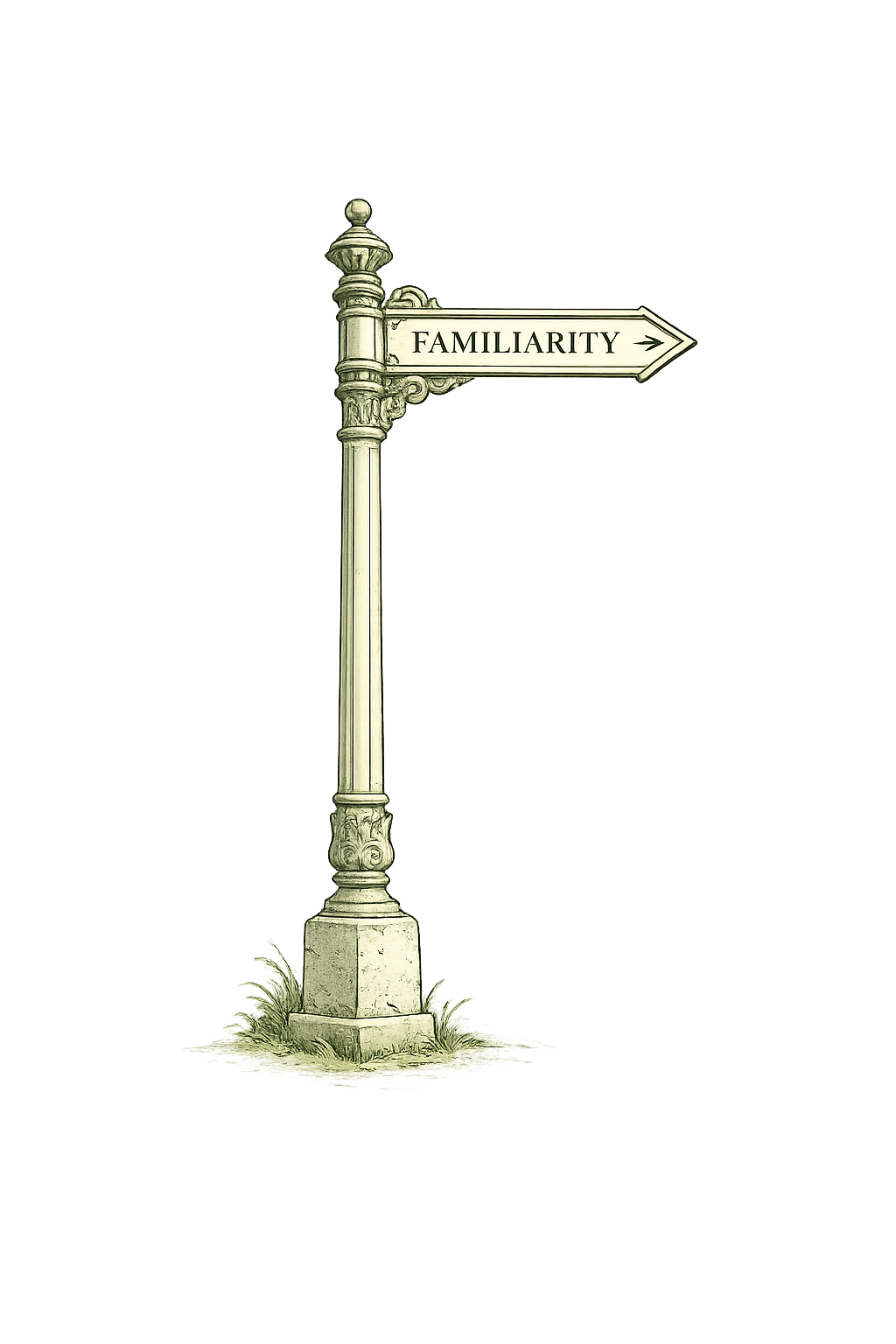
Awkwardly glued together words perhaps. But this will always be my answer.
As a concept, it’s not particularly sophisticated. But ye gods does it work.
And not as a one off, in one sector, for one type of agency, in the right light, when you've blessed the office printer with imported yak tears.
Consistently. I've watched versions of this play out for more than twenty years now. Different agencies. Different sectors. Different markets. The pattern hardly changes.
I think it works because it describes how most buying decisions actually happen. People don't buy strangers. We’ve all heard this. There’s books on it. I’m sure I have a t-shirt or two with this emblazoned on the front.
And we’ve heard it so often because it’s so true. People rarely hire strangers. They rarely trust them. And they almost never give them half an hour of their diary simply because they asked.
And yet… that's exactly how most outreach begins. We introduce ourselves, explain what we do, tell people why we're different. And then ask for thirty minutes of their time.
When you stop and think about it, it's quite a ballsy and extraordinary request.
Not because meetings are difficult. Because time is. Attention is. Trust is. Those things are rarely given away on first impressions. They're accumulated, slowly, and almost invisibly.
That's one of the reasons I think we misunderstand growth.
We tend to celebrate the visible moments. The signed contract. The chemistry meeting. The pitch. The proposal. The LinkedIn post that suddenly takes off. The event that was standing room only.
Those moments are easy to point at because they're obvious and measurable and they feel like progress. Like my first ever boss, they are also very good at getting all the credit.
But those intangible, invisible ones? They usually do a lot of the work (unlike my first ever boss).
Because long before somebody agrees to meet you, they've often been collecting tiny fragments of evidence.
Maybe they've noticed your name a few times. Read one of your articles. Seen your agency attached to a brilliant campaign. Seen somebody they respect comment on your work.
Or perhaps they heard you ask an astute and thought provoking question at an event. Caught a short clip from a podcast you appeared on. Downloaded a report. Read a founder's post.
You get the idea. None of those moments, on their own, wins the work but together they change something much more important.
You stop feeling like a stranger.
I don't think enough commercial strategies are designed around that idea.
Most are designed around activity. More emails. More content. More meetings. More impressions. More outreach.
They're all perfectly sensible things to measure but they can distract us from a much more interesting question.
What actually changes somebody's willingness to buy?
I don't think it's a single brilliant interaction. I do think it's familiarity.
And not accidental familiarity. Strategic, deliberate, curated, accumulated familiarity. That’s a much less witty title, mind.
But it absolutely sets out the considered process of becoming known, recognised and trusted by the people you most want to work with.
That's a very different objective because once familiarity becomes the end goal everything else starts to look different.
Content isn't there to feed an algorithm. It's there to introduce a way of thinking.
Events aren't just networking opportunities. They're moments where relationships move forward.
Podcasts aren't simply marketing assets. They're conversations that allow expertise to travel further than you can.
Even outreach changes. Instead of interrupting strangers in their inbox, you're continuing a conversation that's already begun somewhere else.
That's an important distinction.
One asks for attention and the other really earns it.
For years, I think the industry has encouraged us to think in siloed channels.
LinkedIn.
Email.
Events.
PR.
Partnerships.
Podcasts.
Newsletters.
And yes you can see these as all existing independently but I don't really see them that way anymore.
They're all just vehicles. Different ways of delivering moments of familiarity. The destination is familiarity.
That shift changes almost everything. It allows you to stop asking which channel you should invest in and start asking which experiences will make you less of a stranger.
You can - finally - stop designing content calendars. Instead, you can start designing moments of familiarity.
One useful observation. One thoughtful invitation. One generous introduction. One report that helps somebody think differently. One conversation worth sharing.
Individually, none of those moments feels particularly significant. But all the evidence I have suggests that collectively, they're incredibly powerful.
Buying decisions rarely happen in one dramatic leap, they're usually the final step in a journey that began much earlier. And long before the buyer realised they were even on it.
Which is why the best outreach rarely feels like outreach.
By the time you're asking for the meeting, it no longer feels like the beginning of a relationship. It feels like the continuation of one.
Hear me out. I know it sounds like I’ve just glued ‘strategic’ in front of an everyday concept to make it sound more important (maybe I have).
And, as such, this isn't a phrase you'll hear very often. In fact, I'm not sure anyone else uses it.
Back me into a corner with a pointy stick and ask, "Alright then. What's the one thing I should do if I actually want outbound to work?" and I’ll always say two words.
Awkwardly glued together words perhaps. But this will always be my answer.
As a concept, it’s not particularly sophisticated. But ye gods does it work.
And not as a one off, in one sector, for one type of agency, in the right light, when you've blessed the office printer with imported yak tears.
Consistently. I've watched versions of this play out for more than twenty years now. Different agencies. Different sectors. Different markets. The pattern hardly changes.
I think it works because it describes how most buying decisions actually happen. People don't buy strangers. We’ve all heard this. There’s books on it. I’m sure I have a t-shirt or two with this emblazoned on the front.
And we’ve heard it so often because it’s so true. People rarely hire strangers. They rarely trust them. And they almost never give them half an hour of their diary simply because they asked.
And yet… that's exactly how most outreach begins. We introduce ourselves, explain what we do, tell people why we're different. And then ask for thirty minutes of their time.
When you stop and think about it, it's quite a ballsy and extraordinary request.
Not because meetings are difficult. Because time is. Attention is. Trust is. Those things are rarely given away on first impressions. They're accumulated, slowly, and almost invisibly.
That's one of the reasons I think we misunderstand growth.
We tend to celebrate the visible moments. The signed contract. The chemistry meeting. The pitch. The proposal. The LinkedIn post that suddenly takes off. The event that was standing room only.
Those moments are easy to point at because they're obvious and measurable and they feel like progress. Like my first ever boss, they are also very good at getting all the credit.
But those intangible, invisible ones? They usually do a lot of the work (unlike my first ever boss).
Because long before somebody agrees to meet you, they've often been collecting tiny fragments of evidence.
Maybe they've noticed your name a few times. Read one of your articles. Seen your agency attached to a brilliant campaign. Seen somebody they respect comment on your work.
Or perhaps they heard you ask an astute and thought provoking question at an event. Caught a short clip from a podcast you appeared on. Downloaded a report. Read a founder's post.
You get the idea. None of those moments, on their own, wins the work but together they change something much more important.
You stop feeling like a stranger.
I don't think enough commercial strategies are designed around that idea.
Most are designed around activity. More emails. More content. More meetings. More impressions. More outreach.
They're all perfectly sensible things to measure but they can distract us from a much more interesting question.
What actually changes somebody's willingness to buy?
I don't think it's a single brilliant interaction. I do think it's familiarity.
And not accidental familiarity. Strategic, deliberate, curated, accumulated familiarity. That’s a much less witty title, mind.
But it absolutely sets out the considered process of becoming known, recognised and trusted by the people you most want to work with.
That's a very different objective because once familiarity becomes the end goal everything else starts to look different.
Content isn't there to feed an algorithm. It's there to introduce a way of thinking.
Events aren't just networking opportunities. They're moments where relationships move forward.
Podcasts aren't simply marketing assets. They're conversations that allow expertise to travel further than you can.
Even outreach changes. Instead of interrupting strangers in their inbox, you're continuing a conversation that's already begun somewhere else.
That's an important distinction.
One asks for attention and the other really earns it.
For years, I think the industry has encouraged us to think in siloed channels.
LinkedIn.
Email.
Events.
PR.
Partnerships.
Podcasts.
Newsletters.
And yes you can see these as all existing independently but I don't really see them that way anymore.
They're all just vehicles. Different ways of delivering moments of familiarity. The destination is familiarity.
That shift changes almost everything. It allows you to stop asking which channel you should invest in and start asking which experiences will make you less of a stranger.
You can - finally - stop designing content calendars. Instead, you can start designing moments of familiarity.
One useful observation. One thoughtful invitation. One generous introduction. One report that helps somebody think differently. One conversation worth sharing.
Individually, none of those moments feels particularly significant. But all the evidence I have suggests that collectively, they're incredibly powerful.
Buying decisions rarely happen in one dramatic leap, they're usually the final step in a journey that began much earlier. And long before the buyer realised they were even on it.
Which is why the best outreach rarely feels like outreach.
By the time you're asking for the meeting, it no longer feels like the beginning of a relationship. It feels like the continuation of one.