The Big Stuff
Deck building
Tenuous links between game design and agency growth
5 mins
I love Magic: The Gathering.
Played my first game in 1997. Despite several (half-hearted) attempts at becoming a sensible adult, haven't really stopped since.
If you've never wandered into that particular rabbit hole, here's the brutally condensed version.
You build a deck from sixty cards. Some summon dragons, or goblins. Some throw lightning. Some quietly help the other cards do ridiculous things. "Oh wait. So now my dragons cast lightning bolts too? Well now I'm invested." The aim is simple: reduce your opponent from twenty life to zero before they do the same to you.
Forty years of game design, strategy and rules compressed into three sentences.
It'll do.
One of the first questions almost everybody asks when they pick up the game is:
"What's the best card?"
It's a perfectly reasonable question but it's also kinda the wrong one.
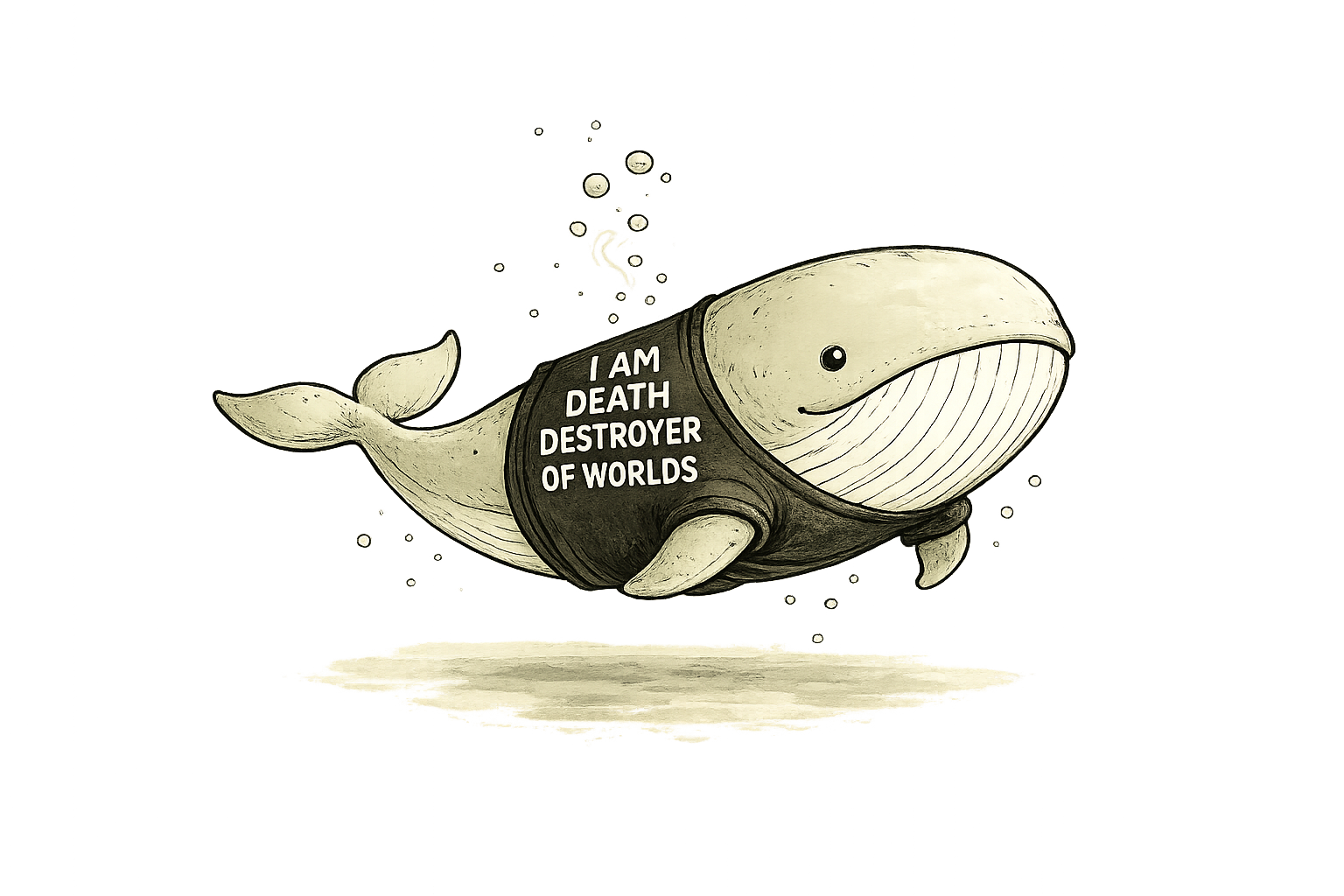
Take Leviathan, a colossal sea monster. He's huge. He has big stats. He's the sort of card that makes you instinctively think, "Well obviously that's the one I want. Why am I fannying around with 1/1 goblins when I can summon a 10/10 spectral whale god?"
If you're wondering whether you can simply draw Leviathan on turn two and immediately flatten your opponent...
No.
Leviathan costs nine mana to cast. Which means you need to spend the early game building enough resources to play it. Which means you need enough lands to produce that mana. Which means you need ways of staying alive long enough to get there. Which means the other fifty-nine cards in your deck suddenly become rather important.
Thanks for bearing with me…. anyway, the lesson here isn't that Leviathan is bad. He's not. He's just not the strategy. He's the payoff. Everything else in the deck exists to make that moment possible.
Tenuous link time. I think agency growth has a habit of asking the same question.
"What's the best CRM?"
"Should we be using Clay?"
"Do webinars still work?"
"Should the founder be posting on LinkedIn?"
"What's the best outreach sequence? How long between emails?"
They're perfectly sensible questions.
They're also remarkably similar to asking what's the best card.
I've seen agencies spend a small fortune implementing HubSpot that nobody ever really used. Beautiful websites with propositions that never quite landed. Founder content that wasn't connected to outreach. Brilliant events with no meaningful follow-up.
None of those things were bad decisions.
They were good cards. Just not being used as part of a coherent deck.
Commercial growth isn't usually won by finding one spectacular tactic. It's won when positioning makes outreach easier. When founder content gives prospects a reason to recognise your name. When your website confirms what your emails hinted at. When partnerships open doors your cold outreach never could.
Each part improves the next.
I can't tell you how many more games I started winning when that clicked for me. Don't hunt for the strongest card but instead think hard about all the possible interactions, combinations, and win conditions.
Agency growth feels remarkably similar.
The question was never, "What's the best card?" It was always, "What are you trying to build?"
...
Right.
If you'll excuse me, I've got a new Goblin deck I'd like to try.
I love Magic: The Gathering.
Played my first game in 1997. Despite several (half-hearted) attempts at becoming a sensible adult, haven't really stopped since.
If you've never wandered into that particular rabbit hole, here's the brutally condensed version.
You build a deck from sixty cards. Some summon dragons, or goblins. Some throw lightning. Some quietly help the other cards do ridiculous things. "Oh wait. So now my dragons cast lightning bolts too? Well now I'm invested." The aim is simple: reduce your opponent from twenty life to zero before they do the same to you.
Forty years of game design, strategy and rules compressed into three sentences.
It'll do.
One of the first questions almost everybody asks when they pick up the game is:
"What's the best card?"
It's a perfectly reasonable question but it's also kinda the wrong one.
Take Leviathan, a colossal sea monster. He's huge. He has big stats. He's the sort of card that makes you instinctively think, "Well obviously that's the one I want. Why am I fannying around with 1/1 goblins when I can summon a 10/10 spectral whale god?"
If you're wondering whether you can simply draw Leviathan on turn two and immediately flatten your opponent...
No.
Leviathan costs nine mana to cast. Which means you need to spend the early game building enough resources to play it. Which means you need enough lands to produce that mana. Which means you need ways of staying alive long enough to get there. Which means the other fifty-nine cards in your deck suddenly become rather important.
Thanks for bearing with me…. anyway, the lesson here isn't that Leviathan is bad. He's not. He's just not the strategy. He's the payoff. Everything else in the deck exists to make that moment possible.
Tenuous link time. I think agency growth has a habit of asking the same question.
"What's the best CRM?"
"Should we be using Clay?"
"Do webinars still work?"
"Should the founder be posting on LinkedIn?"
"What's the best outreach sequence? How long between emails?"
They're perfectly sensible questions.
They're also remarkably similar to asking what's the best card.
I've seen agencies spend a small fortune implementing HubSpot that nobody ever really used. Beautiful websites with propositions that never quite landed. Founder content that wasn't connected to outreach. Brilliant events with no meaningful follow-up.
None of those things were bad decisions.
They were good cards. Just not being used as part of a coherent deck.
Commercial growth isn't usually won by finding one spectacular tactic. It's won when positioning makes outreach easier. When founder content gives prospects a reason to recognise your name. When your website confirms what your emails hinted at. When partnerships open doors your cold outreach never could.
Each part improves the next.
I can't tell you how many more games I started winning when that clicked for me. Don't hunt for the strongest card but instead think hard about all the possible interactions, combinations, and win conditions.
Agency growth feels remarkably similar.
The question was never, "What's the best card?" It was always, "What are you trying to build?"
...
Right.
If you'll excuse me, I've got a new Goblin deck I'd like to try.